

Related Posts
Every August, Gainesville’s roads change almost overnight.
K-12 schools across Alachua County reopen. UF’s fall semester brings tens of thousands of students back to campus. Santa Fe College fills back up. Within the span of a few weeks, streets that were relatively calm all summer are suddenly packed with school buses, student cyclists, pedestrians crossing mid-block, and drivers who haven’t navigated a school zone in months.
The numbers tell the story. A 2023 traffic study found that 13 Gainesville-area schools had more than 500 cars per day speeding through active school zones at 10 or more miles per hour over the limit. Eight schools had over 1,000 speeding violations per day. And statewide, Florida reported 2,700 crashes involving school buses in a single year.
Back-to-school season is one of the most dangerous traffic periods of the year in Gainesville, not just for children, but for drivers, student pedestrians, and cyclists of all ages.
This guide breaks down what each group needs to know: the laws that apply, the risks that spike in August, and what to do if someone’s carelessness puts you or your family in harm’s way.
Why Gainesville Roads Get More Dangerous When School Starts
It’s not just increased volume. It’s the combination of factors that collide all at once:
- School bus routes re-activate across Alachua County after months of inactivity
- UF students flood back to campus, many biking or walking to class
- K-12 school dismissal times overlap with afternoon peak traffic
- Drivers who haven’t adjusted their habits all summer are suddenly sharing roads with children and student pedestrians
- Cyclists and walkers are out earlier and in greater numbers
- Construction and road projects common during summer add additional hazards
The result is a traffic environment that demands extra attention from everyone on the road, whether you’re behind the wheel, on a bike, or on foot.
For Drivers: Florida Laws You Must Follow During Back-to-School Season
School Zone Speed Limits
Florida law requires drivers to reduce their speed whenever school zone signals are flashing. This is not optional, and the consequences of ignoring it are real.
- School zone speed limits in Florida are typically 15 to 20 mph when signals are active
- Fines for school zone speeding are doubled compared to standard speeding violations
- Alachua County’s own traffic study identified 17 schools at heightened risk from speeding
- High Springs Community School currently has an active speed camera system, with expansion to other Alachua County schools under consideration
If you commute near any Gainesville-area school in the morning or afternoon, build extra time into your route. Rushing through a school zone to save two minutes is not worth the fine, the points on your license, or the potential for a tragedy.
Florida’s School Bus Stop Laws
This is where many drivers get it wrong, and where the consequences are most severe.
Under Florida Statute 316.172, here is exactly when you are required to stop for a school bus:
- Two-lane roads: All traffic in both directions must stop
- Multi-lane roads without a median: All traffic in both directions must stop
- Divided highways with a raised barrier or median of 5 feet or more: Only traffic traveling behind the bus must stop; oncoming traffic may proceed
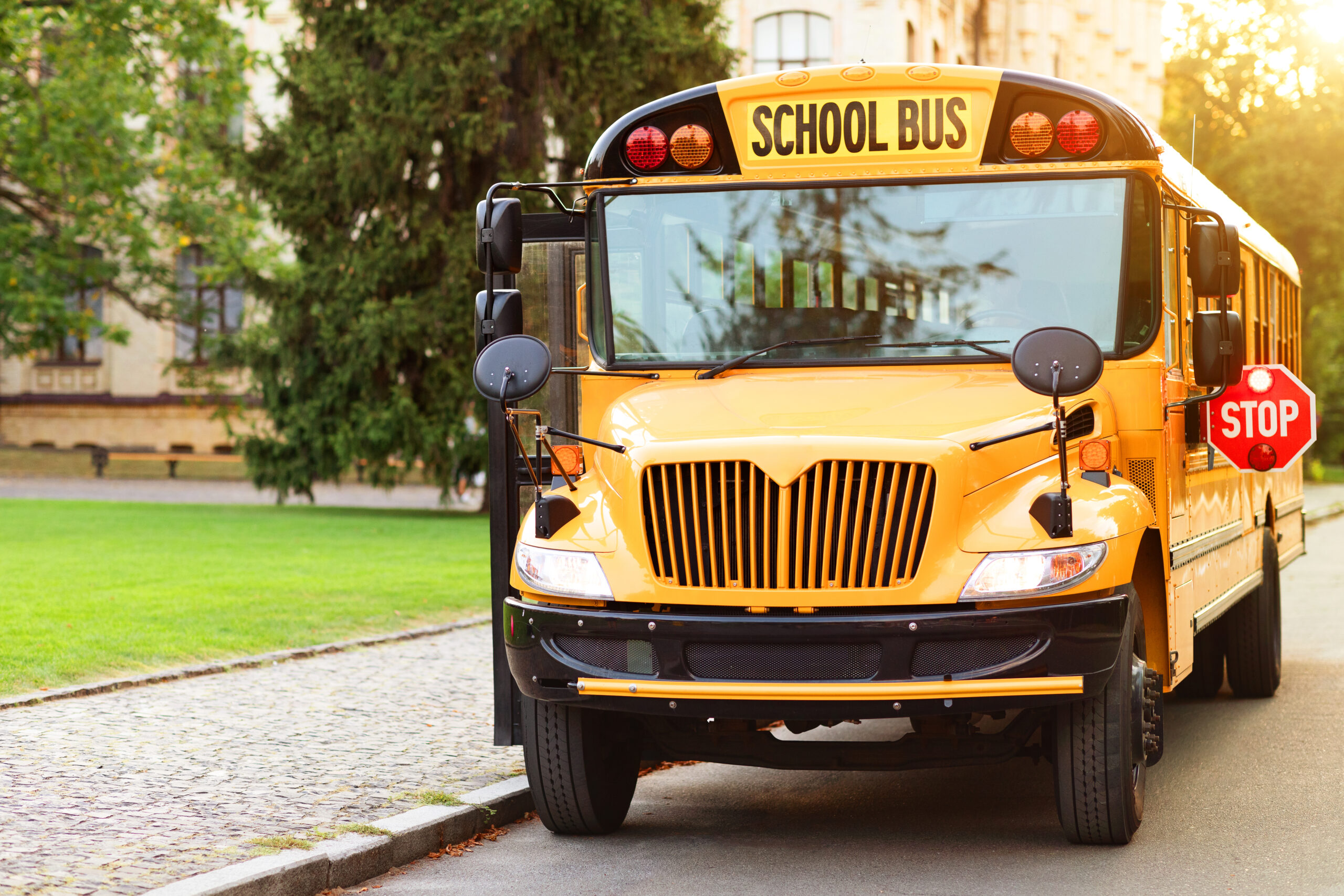
The trigger is clear: when the bus displays its stop arm and flashing red lights, you stop. Period. The law does not allow you to inch forward, slow without stopping, or proceed if you think the children are already on the bus.
Penalties for Illegally Passing a Stopped School Bus
Florida has some of the strictest penalties in the country for this violation:
- Camera-detected violation: $225 civil penalty
- Officer-issued citation (standard): Minimum $265 fine, 4 points on your license, mandatory driver improvement course
- Passing on the boarding/exiting side where children are present: Minimum $400 fine for a first offense
- Violation causing serious bodily injury or death: $1,500 fine, 120 hours of community service, 6 points on your license, minimum one-year license suspension
Several Florida school districts have already deployed stop-arm camera systems on buses, and Alachua County is moving in that direction. Data from these programs shows that over 90% of first-time offenders never repeat the violation after seeing the evidence against them, but by then, the fine, points, and potential injury have already happened.
General Driver Rules in School Zones and Around Buses
Beyond speed limits and bus laws, drivers in Gainesville should follow these rules from August onward:
- Put the phone down completely in school zones, Florida’s hands-free law applies, and distracted driving fines are elevated in school zones
- Yield to crossing guards, their signals carry the same legal weight as traffic signals
- Never block crosswalks or school driveways, even briefly
- Watch for children moving between parked cars, especially near school drop-off zones and bus stops
- Give yourself extra time around UF campus corridors, where pedestrian and cyclist traffic surges significantly at the start of the semester
For Pedestrians: Staying Safe in Gainesville’s School Season Traffic
What Florida Law Says About Pedestrian Rights
Florida law requires drivers to yield to pedestrians in marked crosswalks and at unmarked intersections. That said, pedestrians are not automatically free of responsibility.
- Pedestrians must use sidewalks where they are available
- Where there is no sidewalk, walk facing oncoming traffic
- Crossing mid-block outside of a crosswalk (jaywalking) can affect your legal rights if you are hit
- At intersections with signals, pedestrians must obey the walk/don’t walk indicators
Safety Tips Every Pedestrian Should Follow This Fall
Whether you’re a Gainesville parent walking your child to a bus stop, a UF student heading across campus, or a teacher commuting on foot, these habits can save your life:
- Always cross at marked crosswalks or designated intersections, especially near UF and K-12 schools
- Make eye contact with drivers before stepping off the curb; do not assume they see you
- Look left, right, and left again before crossing, even when the signal says walk
- Stay visible: wear bright or reflective clothing in low-light conditions, especially early morning and late afternoon
- Never walk distracted, headphones and phone screens reduce your ability to hear and react to traffic
- Be especially cautious at high-risk Gainesville intersections, including University Avenue, SW 13th Street, and Archer Road near campus
Particularly High-Risk Situations for Pedestrians
- Early morning and late afternoon, when sun glare affects driver visibility
- Rainy days, when stopping distances are longer and visibility is reduced
- Crossings near apartment complexes and student housing close to campus
- School drop-off and pick-up zones, where driver attention is often divided
If You Are Hit as a Pedestrian
Florida follows a comparative fault standard, meaning your compensation can be reduced if you are found partially at fault, but you can still recover even if you share some responsibility. Document everything, seek immediate medical care, and consult an attorney before speaking with any insurance company.
For Cyclists: Florida Law, Safety, and Your Rights on the Road
How Florida Law Classifies Cyclists
This surprises many people: under Florida Statute 316.2065, a bicycle is legally classified as a vehicle, and the person riding it is legally a driver. That means:
- Cyclists have the same rights to the roadway as drivers of motor vehicles
- Cyclists must obey the same traffic laws: signals, stop signs, lane rules
- Cyclists traveling slower than traffic on a road without a bike lane must ride as far right as practicable, with specific exceptions for turning, overtaking, avoiding hazards, or traveling in a lane too narrow to share safely
Cycling on sidewalks is permitted in most of Florida, but cyclists must yield to pedestrians and give an audible signal before passing.
Equipment Required by Florida Law
- Helmet: Required for all riders under 16, strongly recommended for everyone
- Front light: White, visible from 500 feet (required at night)
- Rear light/reflector: Red, visible from 600 feet (required at night)
- Brakes: Must be capable of stopping within 25 feet at 10 mph
What Drivers Must Do Around Cyclists
- Maintain a minimum of 3 feet of clearance when passing or traveling behind a cyclist
- Check for cyclists before making right turns, right-hook collisions are among the most common and dangerous cyclist accidents
- Slow down and watch for cyclists entering roadways from driveways, parking lots, and side streets near schools
- In school zones, give extra space to young cyclists who may be less predictable
Why Cyclist Injuries Are So Serious
Cyclists have no structural protection between themselves and the road, other vehicles, or fixed objects. When a driver fails to yield, misjudges clearance, or is simply not paying attention, the resulting injuries are often catastrophic: traumatic brain injuries, spinal cord injuries, fractures, and road rash requiring surgical treatment.
Back-to-school season in Gainesville sends thousands of additional cyclists onto roads that were designed primarily for cars. That mismatch creates real danger, and when a driver’s negligence causes a cyclist to be injured, Florida law provides a path to recovery.
What to Do If You Are Injured in a Back-to-School Traffic Accident
Regardless of whether you were driving, walking, or cycling, the steps you take immediately after an accident matter enormously.
- Call 911, report the accident, request medical assistance, and ensure a police report is created
- Seek medical care immediately, even if you feel fine; adrenaline masks pain, and delayed symptoms are common with head, neck, and soft tissue injuries
- Document the scene, photographs of vehicles, road conditions, signage, skid marks, and visible injuries
- Collect witness information, names and contact numbers of anyone who saw what happened
- Note identifying details, bus number, school district vehicle ID, license plates, and driver information
- Do not speak with insurance adjusters before consulting an attorney; adjusters work for the insurer, not for you
- Contact a personal injury attorney, particularly if the accident involved a school zone violation, a stopped school bus, or a government-owned vehicle
Florida’s Statute of Limitations
Florida law gives personal injury victims 2 years from the date of injury to file a claim. If a government vehicle such as a school bus is involved, additional notice requirements and shorter deadlines may apply. Do not wait.
Know the Law. Know Your Rights. Stay Safe This School Year.
Back-to-school season in Gainesville is exciting, but it brings real, documented dangers to local roads. Whether you drive, walk, or ride, understanding Florida’s traffic laws puts you in a better position to stay safe and to protect your legal rights if someone else fails to do the same.
Injured in a School Zone or Traffic Accident in Gainesville? We Can Help.
When a driver blows through a school zone, illegally passes a stopped bus, or fails to give a cyclist or pedestrian the space and respect the law requires, innocent people pay the price. Children. Students. Teachers. Commuters. Parents just trying to get through the morning.
At Schackow & Mercadante, P.A., our Gainesville personal injury attorneys have helped injured Floridians hold negligent drivers accountable for decades. We understand the specific traffic patterns, school corridors, and legal landscape that make Alachua County cases unique, and we fight hard for every client who walks through our door.
If you or someone in your family was injured near a school zone, bus stop, campus crosswalk, or anywhere a driver’s carelessness caused harm, call us today.
Your consultation is free. You pay nothing unless we win.
Call 352-371-3000 or reach out online to speak with a member of our team. Back-to-school season should mean fresh starts and new opportunities, not a trip to the emergency room.